
Tag: Connected Capital

  • GSCF Launches C4: Connected Capital Control Center

    GSCF Launches C4: Connected Capital Control Center

    Delivering Visibility and Control to Corporates, Banks & Asset Managers

    RELEASE DATE: 26 March, 2026, 9:00 am EDT   

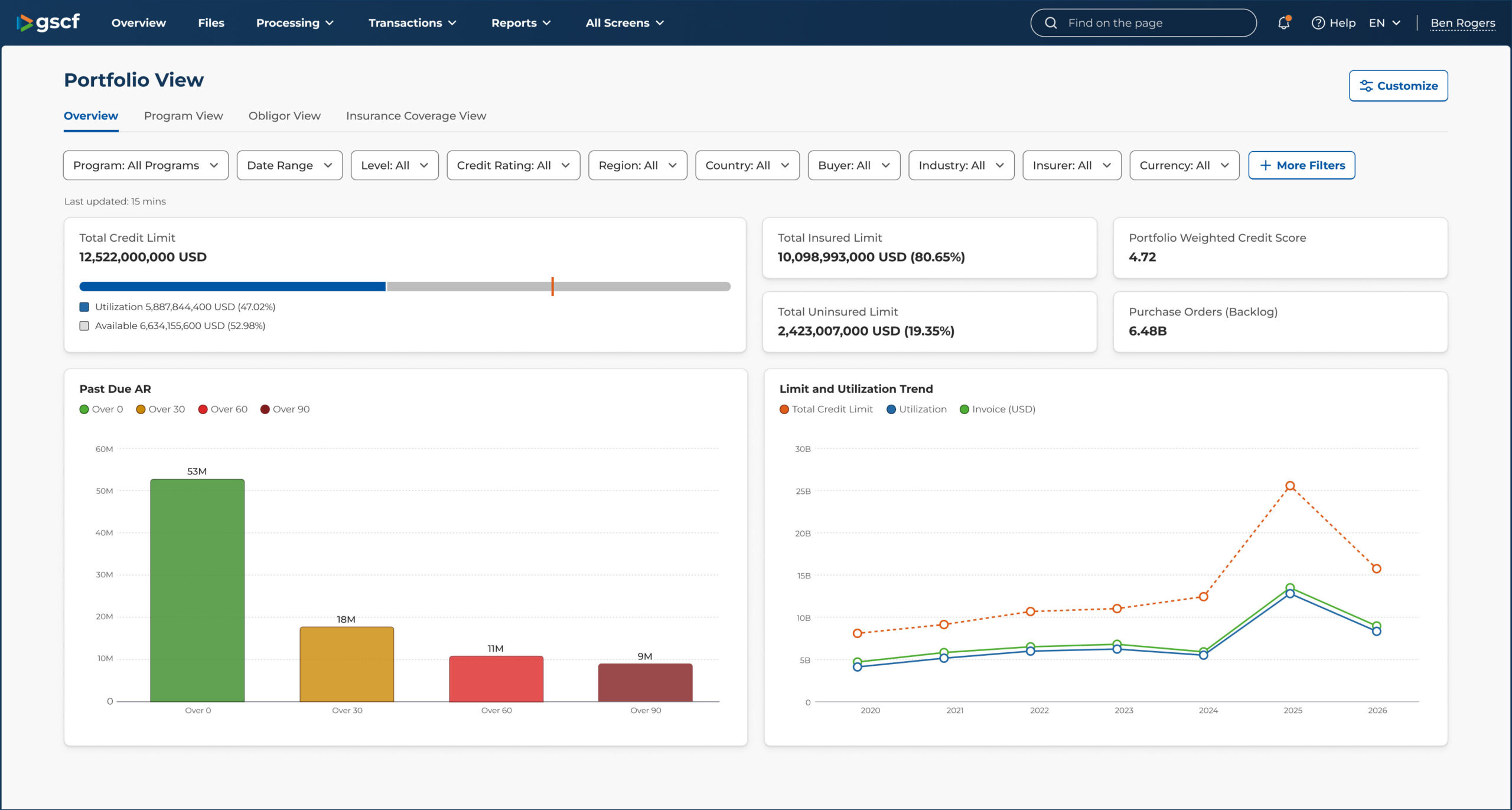
    NEW YORK, March 26, 2026 – GSCF, a leading global provider of working capital solutions, today announced the launch of Connected Capital Control Center (C4) – a servicing platform designed to help banks, asset managers and enterprise corporates originate, manage and analyze working capital with greater visibility, control and confidence across multiple programs.

    Built to support GSCF’s Connected Capital ecosystem and the broader market landscape, C4 addresses a growing market need: organizations are deploying multiple working capital programs across regions, funders, insurers and service providers, yet lack a single source of truth to track exposure, liquidity, cost and risk across their entire portfolio of programs.

    C4 consolidates program data and workflows into one unified control layer for programs serviced by GSCF or external providers, enabling financial institutions and enterprises to scale working capital more efficiently while reducing operational friction and risk.

    “As working capital portfolios grow more complex, fragmented views and manual oversight aren’t sustainable,” said Doug Morgan, Chief Executive Officer of GSCF. “C4 brings portfolio-level clarity to enterprises and their funding partners – so decisions can be made with confidence, limits can be enforced proactively, and working capital can be deployed more strategically across the global ecosystem.”

    C4 for Enterprise Corporates: Advanced Intelligence for the Office of the CFO
    For global enterprises relying on multiple working capital programs across regions, funders and administrators to drive liquidity and fuel growth, C4 provides a single, aggregated view of all working capital activity to eliminate data silos and enable centralized oversight.
    Key capabilities for corporates include:

    • Aggregated Data Views: A single source of truth consolidating all working capital programs, regardless of funder or platform
    • Portfolio-Level Intelligence: Holistic visibility across regions, buyers, suppliers and counterparties to support CFO- and Treasurer-level decisioning
    • Cross-Funder Transparency: Clear insight into funding flows, utilization and pricing across multiple banks and capital partners
    • Global Operational Workflows: Standardized and automated processes designed for multi-region, multi-funder environments
    • Exposure and Concentration Management: Program- and portfolio-level analytics to identify risk, adjust limits and optimize capital allocation

    By unifying data and decisioning at the portfolio level, C4 allows enterprises to move beyond reactive reporting and manage working capital as a strategic asset.

    C4 for Banks: Scaling Working Capital with Confidence and Control
    For trade finance and structured working capital teams, C4 delivers real-time visibility and embedded controls across multi-program and multi-funder portfolios to enable faster origination, stronger governance and scalable growth.
    Key capabilities for banks include:

    • Portfolio-Level Visibility: A consolidated, real-time view of exposure across obligors, regions, insurers and structures
    • Built-In Limit Management: Embedded credit limits, concentration thresholds, alerts and automated “pause” mechanisms
    • Streamlined Accounts Receivable: Standardized AR processes that scale from simple programs to complex, insured structures
    • Co-Origination and Extended Capacity: A unique combination of servicing expertise and funding capabilities that expands balance-sheet flexibility

    C4 empowers banks to shift from a model of program-by-program oversight to true portfolio management, reducing blind spots while increasing confidence in the ability to grow with efficiency and discipline.

    A Control Center Built for Scale, Not Silos
    Unlike today’s working capital landscape that can be fragmented across operations, technology and data, C4 is designed as a portfolio-level control layer that integrates technology with GSCF’s world-class managed services. Backed by more than 30 years of experience operating complex working capital programs globally, GSCF embeds operational precision directly into the platform – allowing clients to offload complexity while fully retaining control.

    “C4 addresses the needs of banks and enterprises today while supporting their growth across multiple programs, partners and jurisdictions,” said Shannon Dolan, Chief Product Officer of GSCF. “By consolidating data, limits, workflows and decisioning into one control center, C4 will help teams act faster, reduce risk and continuously optimize working capital performance at scale.”

    “The evolution of working capital management is moving beyond process efficiency toward liquidity orchestration. As enterprises and their financial partners deploy programs across an increasingly complex ecosystem of funders, regions and structures, the demand for portfolio-level visibility and control is intensifying. C4 reflects where the market is heading – a unified control layer that enables CFOs and Treasurers to manage liquidity not just as an operational necessity, but as a driver of business performance and resilience,” said Senior Research Director, IDC Enterprise Applications, Kevin Permenter.

    About GSCF

    GSCF is the leading global provider of working capital solutions. The Company enables corporates and financial partners to accelerate growth, unlock liquidity and manage the risk and complexity of the end-to-end working capital cycle. We originate, manage and analyze working capital programs through our innovative Working Capital as a Service offering, combining the power of a configurable and comprehensive technology platform, expert services and a Connected Capital ecosystem of alternative capital solutions and bank capital. GSCF’s team of working capital experts operates in over 75 countries to solve global working capital efficiency challenges. Visit www.gscf.com to learn more.

  • Why Data Integration Is the Hidden Constraint on Working Capital Performance 

    Why Data Integration Is the Hidden Constraint on Working Capital Performance 

    Across nearly every finding in GSCF’s Working Capital Leadership Report 2025, one theme stands out: data integration remains the primary bottleneck to working capital performance. 

    Only 10% of organizations report fully integrated, real-time data, while 50% describe their systems as only partially integrated, and 25% say they are not integrated at all. Even where automation exists, maturity remains limited: 40% report moderate automation, 36% basic and 23% none. 

    This fragmentation fuels manual processes, weak forecasting and limited visibility. The result is a growing gap between finance transformation and operational reality. 

    Leading corporates prioritize integration as the foundation of working capital performance. By connecting systems and aligning data, they transform reporting into real-time intelligence and liquidity into a strategic advantage. 

    Key Takeaways 

    • Fragmented data environments are the single biggest constraint on working capital performance. 
    • Automation without integration delivers limited value and often increases manual workarounds. 
    • Integrated data is the foundation that enables forecasting accuracy, funding optimization and cross-functional execution. 

    How GSCF Helps 

    GSCF aggregates transaction and program data to reduce manual processes and improve transparency and operational efficiency. 

    With C4 (Connected Capital Control Center) coming soon, this integration extends across the entire working capital portfolio, including programs and funders beyond GSCF. By consolidating data into a single, unified view, C4 enables organizations to manage working capital with greater control, consistency and confidence. 

    Learn more: Download the Working Capital Leadership Report 

  • Only 4% Have Real-Time Forecasting – Why Visibility Is the New Battleground 

    Only 4% Have Real-Time Forecasting – Why Visibility Is the New Battleground 

    In an environment defined by interest-rate volatility and supply-chain disruption, forecasting accuracy has become a strategic differentiator. Yet the data from GSCF’s Working Capital Leadership Report 2025 reveals a stark reality: only 4% of organizations have fully automated, real-time cash forecasting. 

    The majority are still operating with limited visibility. 53% rely on semi-automated forecasting with manual inputs, while 34% continue to use spreadsheet-based models. These approaches may have worked in a more stable environment, but they struggle under today’s conditions of rapid demand shifts and rising funding complexity. 

    This data gap has real consequences. Poor visibility makes it harder to anticipate liquidity shortfalls, optimize funding decisions, or respond proactively to disruption. It also forces treasury and finance teams into a reactive posture, managing cash after the fact rather than steering it strategically. 

    What sets the small cohort of high performers apart is not just technology, but mindset. Organizations with advanced forecasting capabilities are far more likely to report confidence in liquidity planning and faster decision-making cycles across finance, sales and operations. 

    As the report makes clear, forecasting is no longer a technical nice-to-have. It is the foundation on which resilient working capital strategies are built. 

    Key Takeaways 

    • Real-time forecasting remains rare, creating a widening gap between organizations that can anticipate liquidity risk and those that can only react to it. 
    • Reliance on spreadsheets and semi-automated processes is no longer just inefficient, it actively constrains agility in volatile markets. 
    • Data-driven maturity is becoming a strategic differentiator, not a treasury capability. 

    How GSCF Helps 

    GSCF’s Working Capital as a Service model combines technology, expert services and a Connected Capital ecosystem of alternative and bank capital to deliver visibility across all your global working capital programs. 

    With C4 (Connected Capital Control Center) coming soon, GSCF extends this visibility to the portfolio level, aggregating data across working capital programs, regions and funders into a single source of truth. This consolidated view improves forecasting confidence and enables finance leaders to assess liquidity position and exposure across the full working capital landscape rather than program by program. 

    Learn more: Download the Working Capital Leadership Report 

  • Avoiding Credit Market Pitfalls: How Data Transparency Drives Smarter Risk

    Avoiding Credit Market Pitfalls: How Data Transparency Drives Smarter Risk

    Recent developments in the credit markets have underscored the importance of robust risk management and data transparency. The First Brands situation, which resulted in losses for numerous funders due to double-pledged or fabricated receivables, has become a clear example of why thorough due diligence matters.

    GSCF’s Approach: Spotting Red Flags Early

    Over the past five years, GSCF was approached multiple times to participate in First Brands’ accounts receivable programs. Each time, our team of working capital, credit and risk experts – in addition to our Connected Capital platform and risk protocols – identified several high-level concerns, such as gaps in transparency, complexity in funder involvement and other risk factors. These red flags prompted us to pass on every opportunity, ensuring that GSCF maintained zero exposure to First Brands.

    How GSCF Helps Expand Risk Coverage

    • Proactive Risk Management: Our platform alongside our Credit and Capital Markets teams flag issues early, allowing us to avoid opportunities that don’t meet our standards – protecting our clients and partners from unnecessary risk.
    • Mitigate Counterparty Risk: Integrated credit and risk management tools help monitor buyer and supplier performance and give our corporate and bank partners the confidence to respond to early warning signals. 
    • Scale Globally with Confidence: For those managing global working capital programs, we can provide the data transparency and localized legal, regulatory and credit frameworks tailored to each market.

    While other funders are now managing the fallout from First Brands, GSCF’s proactive approach and commitment to transparency have kept our clients safe. We continue to lead the way in risk management, setting a new standard for accountability and data-driven decision making.

    The First Brands case highlights why data transparency and rigorous due diligence are essential in today’s credit market. With the combination of GSCF’s risk management experts and Connected Capital platform, our clients benefit from an ecosystem designed to prevent issues before they arise, ensuring confidence and security in every transaction.

    Best Practices for Navigating Today’s Credit Climate

    1. Prioritize Data Transparency: Insist on direct access to transaction-level data and historical payment records. Transparency is the foundation of effective risk management.
    2. Strengthen Due Diligence: Go beyond surface-level checks. Regularly review collateral, validate receivables and ensure there are no double pledges.
    3. Monitor Counterparty Performance: Use integrated tools to track buyer and supplier behavior and respond quickly to early warning signals.
    4. Diversify Funding Sources: Avoid over-reliance on a single funder or platform to reduce concentration risk. While diversification is important, ensure all parties are aligned on transparency and controls.


    If you’d like our team of working capital experts to conduct a proactive risk assessment of your working capital portfolio, reach out to us today. We’re here to help you navigate uncertainty and strengthen your risk controls with the power of data transparency.

  • From Tactical to Strategic: Why Data is Reshaping Working Capital

    From Tactical to Strategic: Why Data is Reshaping Working Capital

    Most companies still treat working capital as a tactical fix – patching up cash flow with manual processes and fragmented data. But a preview of the upcoming Working Capital Leadership Report shows a clear shift: leaders are using automation and integrated data to turn working capital into a strategic growth engine.

    Early findings from the 2025 survey:

    • Manual processes and poor data integration are holding companies back. Nearly 50% cite inefficient processes as their top challenge, and only 10% have fully integrated, real-time data across finance, procurement and operations.
    • Forecasting is still lagging. Over half (52%) rely on semi-automated systems with manual inputs, and almost a third (31%) still use spreadsheets. Just 4% have fully automated, real-time forecasting.
    • Automation is advancing, but slowly. 40% report moderate automation (like RPA), but 23% have none at all. No respondents claim advanced AI-driven automation yet.
    • Funding is diversifying. 20% of companies now source liquidity from multiple funders, including non-bank partners, while banks still anchor 62% of working capital programs.

    Why does this matter?

    • Companies that move from tactical fixes to strategic integration report faster cash conversion cycles, better forecasts and stronger supplier relationships.
    • Working capital champions use data-led decision-making, cross-functional collaboration and executive sponsorship to drive measurable business impact.

    Bottom line:
    The future belongs to those who automate, integrate and collaborate. Tactical tools solve today’s problems; technology, data and multiple funding sources unlock tomorrow’s growth.

  • Private Equity and Global Risk: Rethinking Strategy in the Tariff Era 

    Private Equity and Global Risk: Rethinking Strategy in the Tariff Era 

    As macroeconomic and geopolitical factors converge, private equity firms are rethinking their exposure to global pressures, particularly in the form of tariffs and trade policy volatility. These forces are reshaping how deals are sourced, evaluated, and structured. 

    Sector Resilience and Rotation Toward Services 

    Certain sectors, especially software and business services, are being viewed as more resilient in the face of tariff uncertainty. These businesses often have fewer physical goods crossing borders and are therefore less exposed to direct tariff costs. However, inflationary effects can still impact downstream margins, particularly when cost inputs rise. 

    Geographic Diversification to Mitigate Concentration Risk 

    Firms are exploring geographic expansion to mitigate concentration risk. For example, a Canadian portfolio company may look to grow into the U.S. or Europe, not only for market opportunity but also to hedge against changes in trade policy. This is particularly relevant for funds with sector exposure in manufacturing, logistics, and consumer goods. 

    Tariffs as a Deal Structuring Variable 

    Deloitte’s 2024 M&A Trends Survey notes that nearly 1 in 4 cross-border M&A deals now includes tariff-adjusted valuation scenarios, underscoring the need for adaptive underwriting models. 

    In some M&A processes, the impact of tariffs is so significant that buyers are submitting dual bids, one assuming normal conditions and another adjusted for tariff exposure. This practice underscores just how embedded macro risk has become in PE underwriting. 

    Building Resilient, Globally-Aware Portfolios 

    Over 60% of private equity firms in North America cited geopolitical instability and trade policy shifts as a top risk in 2025, according to Preqin. In response, firms are embedding geopolitical analysis into due diligence. 

    Blackstone, for example, sees volatility from trade negotiations as an investment opportunity. CEO Stephen Schwarzman noted that uncertain markets often present the best time to deploy capital. With $177 billion in dry powder, Blackstone continues to act on global dislocation opportunities. He also revealed plans to invest up to $500 billion in Europe over the next decade, citing improving macro conditions, deeper government spending, and favorable valuations. 

    PE firms are taking a more analytical, scenario-based approach to global risk. Cross-functional diligence teams, including tax, trade compliance, and political risk analysts, are increasingly part of deal evaluation. 

    While the full impact of new tariffs may not yet be fully felt, firms should prepare for the possibility of more material disruptions as the year progresses. As such, firms are wise to hedge structurally now and factor in the potential downstream effects of trade disruptions to position themselves to respond with speed and flexibility. 

    How GSCF Can Help  

    GSCF helps clients navigate tariff volatility and geographic uncertainty by offering trade finance solutions that adapt to global risk. Whether structuring cross-border receivables programs or supporting localized funding needs, our solutions are designed to scale with your strategy and keep capital flowing despite external headwinds. 

    Now is the time to assess and understand your alternative financing options so when market signals shift or disruptions hit, you’re ready to act with confidence. GSCF ensures your financing structures are sound, flexible, and ready to deploy when timing is critical. 

  • Navigating Uncertainty: How Private Equity is Adapting to a Shifting Market 

    Navigating Uncertainty: How Private Equity is Adapting to a Shifting Market 

    Uncertainty continues to define the private equity (PE) landscape in 2025. From fluctuating macroeconomic signals to geopolitical shifts and evolving sector dynamics, PE firms face a complex set of variables when evaluating opportunities. The result? A significant widening in bid-ask spreads and a more cautious approach to deploying capital. 

    Bid-Ask Spread Widening: A Reflection of Market Ambiguity 

    According to PitchBook, the average global bid-ask spread in private equity widened by over 25% from 2021 to 2024, especially in tech and consumer sectors. This has further complicated deal structuring and contributed to delayed timelines. 

    Across many sectors, we’re seeing deal activity slow not because of lack of interest but because buyers and sellers are operating from very different assumptions. Sellers often anchor to past valuations, while buyers bake in risk premiums, recession fears and uncertainty around growth trajectories. This disconnect has created friction, especially in sectors with less predictable earnings. 

    Dry Powder Preservation and GFC Parallels 

    Bain & Company reports that global private equity dry powder reached $2.6 trillion by early 2025, a record high. Despite this, investors remain selective, deploying capital into high-conviction deals while waiting for clearer market signals. 

    Many funds are holding capital for what they consider high-conviction bets, deals that resemble post-2008 dislocation opportunities. During the Global Financial Crisis (GFC), quality assets were sold off under pressure. Some investors are preparing for similar opportunities to emerge, especially if credit markets tighten or distressed assets hit the market. 

    The IPO Slowdown and Extended Private Holding Periods 

    The initial public offering (IPO) window remains muted, pushing more companies to extend their time in the private markets. This has reshaped expectations around hold periods and fund life cycles. In turn, firms are focusing more heavily on value creation strategies to sustain long-term growth and remain flexible with exit timing. 

    Secondaries and Strategic Sales as Exit Alternatives 

    With public market exits limited, funds are increasingly looking to secondaries and strategic buyers for liquidity. Secondary transactions provide a way to return capital to LPs and generate DPI (distributions to paid-in capital), which is critical in today’s cautious fundraising environment. Strategic sales, particularly to well capitalized corporates, offer an attractive path when IPOs are off the table. 

    Signs of Rebound: A Blackstone Perspective 

    There are reasons for optimism. Blackstone’s Head of North America Private Equity, Martin Brand, recently noted that the firm expects “an improved environment for mergers & acquisitions and a pickup in IPO activity” in 2025, anticipating the ability to “sell and exit more than twice the number of private equity investments” compared to the prior year. This signals renewed market momentum and an opening of the exit window. 

    What This Means for 2025 and Beyond 

    The private equity market is not frozen, but it has become more selective. Funds are recalibrating valuation models, incorporating broader risk scenarios, and emphasizing discipline in underwriting. Precision, patience, and a well-prepared pipeline are more important than ever. 

    How GSCF Can Help  

    GSCF supports private equity firms by providing working capital solutions that bring flexibility and liquidity to their portfolios. Our platform enables real-time visibility across receivables, streamlined onboarding of suppliers and buyers, and scalable financing programs tailored to uncertain markets. We help clients unlock value even when exits are delayed or fundraising is challenging. Critically, GSCF can move faster than traditional lenders, delivering funding quickly when timing matters most. This speed and agility make us a strategic partner for firms looking to act decisively in a volatile environment. 

  • Strategic Planning in a Trade-Constrained World: Turning Risk Into Opportunity

    Strategic Planning in a Trade-Constrained World: Turning Risk Into Opportunity

    When tariffs rise or trade policies shift unpredictably, the ripple effects across the supply chain are swift and severe. For finance leaders, this isn’t just a compliance challenge – it’s a strategic inflection point.

    The Office of the CFO’s Imperative: Adaptive Capital Strategy

    Increased tariffs act like a tax on inputs, which tightens margins and complicates cash flow forecasting. This forces a shift in working capital strategy – from reactive cost containment to proactive capital reallocation. CFOs who treat tariffs solely as a line-item cost miss the broader picture: tariffs impact inventory positioning, supplier relationships, sourcing decisions and even customer pricing structures.

    This is where financial agility becomes a growth lever.

    By reassessing your capital structure and taking a connected capital approach, finance can realign liquidity to where it has the highest strategic impact – such as prepaying key suppliers to lock in price stability, investing in nearshoring to mitigate risk, or increasing access to alternative capital to bridge timing gaps in a volatile sourcing environment.

    Liquidity Under Pressure: Building Cushion Without Drag

    Tariffs, trade restrictions, and shifting geopolitical alliances strain liquidity in two key ways:

    • Longer lead times and higher landed costs: Capital gets trapped in transit or held in warehouses.
    • Disrupted supplier terms: Counterparties may demand faster payment or shift risk downstream.

    In this context, traditional metrics like DPO and DSO no longer tell the full story. Savvy finance strategists are building liquidity buffers not just to survive tariff-related disruption, but to deploy them as competitive advantages – allowing their companies to secure preferred vendor status, meet customer demand faster, or capitalize on distressed asset buys when competitors falter.

    Tariffs as a Catalyst for Strategic Reinvention

    While the immediate response to tariffs may be defensive (e.g., rerouting supply chains or raising prices), the long-term opportunity is offensive: transforming your capital allocation model to favor agility over rigidity.

    Ask yourself:

    • How quickly can your organization pivot sourcing or pricing strategies?
    • Do you have the right funding partners in place to flex when trade winds shift?
    • Is your working capital trapped in the wrong parts of your value chain?

    The companies that win in a tariff-laden future won’t be the ones that simply absorb costs – they’ll be the ones that translate those pressures into liquidity-backed decisions that fuel innovation and market share expansion.

    Contact us to see how GSCF can support your working capital needs.

    Explore our latest playbook for finance leaders navigating trade uncertainty.

  • Tariffs, Tension, and the Office of the CFO’s Competitive Edge

    Tariffs, Tension, and the Office of the CFO’s Competitive Edge

    The reintroduction of 25% U.S. tariffs on multiple countries is more than political posturing, it’s a macroeconomic shockwave that reverberates through every balance sheet. CFOs don’t have the luxury of waiting for trade policy to stabilize. The Office of the CFO must act now – to protect liquidity, preserve margins, and turn volatility into value.

    A CFO’s Reality Check

    The latest round of tariffs is forcing leadership teams to reassess supplier relationships, pricing strategies, and financing structures in real time. These aren’t theoretical risks – they’re immediate cash flow events. Procurement teams may be renegotiating contracts, but the lag between strategy and execution can be fatal to liquidity.  Unfortunately, the changeable nature of these tariff mandates doesn’t negate them – it actually increases the need for CFO’s to be nimble and prepared to respond quickly.

    That’s why GSCF offers a proactive approach with our Connected Capital model with alternative capital channels and integrated working capital programs to strengthen customers’ financial position and gain real-time control.

    Why This Isn’t Just About Trade

    Tariffs act as a slow-moving liquidity crisis. Margins compress. Suppliers become stressed. Cash conversion cycles elongate. If you’re waiting for your bank to offer more credit, you’re already behind.

    GSCF’s hybrid model has allowed us to:

    • Deploy alternative capital without increasing our leverage ratios
    • Maintain strong supplier ties by offering early payments without weakening our own liquidity
    • Access dashboards that model risk exposure across regions in real time

    This is not about riding out the storm. It’s about using the storm to reset how we finance growth.

    The Strategic Window Is Open, But Not Forever

    The 90-day pause before tariffs fully take effect isn’t a grace period – the run-up periods to implementation are a countdown. We’re using this window to help customers hardwire resilience into their working capital model. GSCF is a key partner in enabling that shift.

    If you’re still viewing working capital as an operational task, you’re missing the bigger play.

    This is finance’s moment to lead. Contact us today to see how GSCF can support your working capital needs.

    Contact us to see how GSCF can support your working capital needs.

    Explore our latest playbook for finance leaders navigating trade uncertainty.

  • The Connected Capital Blueprint

    The Connected Capital Blueprint

    Download the new GSCF eBook

    CFOs and finance leaders are under pressure to fund growth, exceed metrics and stay agile – all at once. Traditional financing strategies often can’t.

    That’s why we built the Connected Capital Blueprint – a practical guide featuring 7 real-world examples of how companies are transforming working capital into a competitive advantage.

    What you’ll find inside:

    • Alternative capital models that work in today’s environment
    • Flexible solutions for every working capital scenario – from M&A to chargebacks, large orders and more
    • Off-balance-sheet strategies that protect ratings and ratios

    If your current capital structure is slowing down your growth strategy, it’s time to rethink the model.

    Read the Connected Capital Blueprint